Author Archive for R. Oliphant

BOARD REPRESENTATIVE BILL KIEL PUBLICLY REVEALS HOSTILITY TOWARD HIM SINCE BEING ELECTED TO GOVERNING BOARD; NOT PROVIDED NOTICE OF VARIOUS EVENTS INCLUDING GRADUATION AND PRESCOTT PINES DEDICATION, THREATENED WITH ARREST

Astonishingly, informs fellow District Governing Board members that he feared President Rhine would use College police under her control to arrest him for trespass if he attended graduation as either a student or District Governing Board member

During the May 29, 2025, Yavapai Community College District Governing Board self-assessment meeting, observers were taken aback when First District Representative William Kiel revealed that he had not been invited to attend graduation or any recent campus dedication events—despite three other Board members having received invitations.
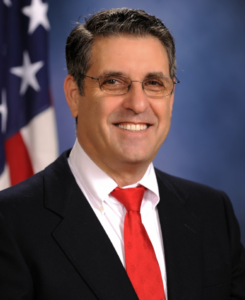
Board Representative William Kiel

Even more startling was Kiel’s disclosure that he feared College President Dr. Lisa Rhine would have had him arrested for trespassing had he attempted to attend the events as a member or the Board. He noted that although he was an enrolled student at the College throughout the semester, he had become involved in an unspecified dispute, after which President Rhine allegedly indicated that he would be arrested if he entered campus for any reason other than to attend class.

During the meeting, Mr. Kiel addressed the Board directly. Here is some of what he said:

“First of all, I actually wanted to go to the graduation for two reasons: Number one, I’m graduating as a student—or at least receiving one certificate. Number two, I wanted to be there as a Board member. But as I assume the rest of the Board knows, I’ve been given a no-trespass order from the College.”

“I believe that is absolutely a B.S. excuse or reason to try to punish me in some manner. I was advised that if I attended, I could be arrested. . . . ”

“As far as the Board coming together, I made suggestions to our counsel months ago that I thought it would be a good idea to hold a workshop like this one to try to improve relations. I was told there was no interest in doing that.”

“I have not been given any sort of warm reception by this Board since I was elected. It has been very hostile toward me. I have not been hostile in return. I may raise issues I disagree with or question whether we’re acting in the College’s best interest—but I’ve never been disrespectful to anyone on this Board. Unfortunately, the same cannot be said about how some Board members have treated me, including personal attacks.”

YAVAPAI COMMUNITY COLLEGE HAS ANOTHER TURNOVER IN LEADERSHIP POSITIONS

After seven years, Associate Vice President of Community Relations, Tyler Rumsey, has resigned to return to Pennsylvania

Tyler Rumsey, Associate Vice President of Community Relations at Yavapai Community College, has resigned after seven years with the institution.

Rumsey initially joined the College as Director of Marketing and was later promoted to Associate Vice President of Community Relations. He is returning to Pennsylvania to be closer to friends and family and to pursue a new career opportunity.

His departure comes amid a notable series of leadership changes at the College. Vice President Dr. Diane Ryan resigned in June 2023 and was subsequently replaced by Dr. Douglas Berry, who now serves as Provost. In July 2023, nationally recognized innovator Kimberly Moore was appointed to lead the newly established Division of Workforce and Innovation as Chief Workforce Innovation Officer. She left the position in January 2024 after seven months; it remains unclear whether a successor has been appointed.

Additionally, the College has experienced turnover in approximately half a dozen coaching and athletic administrative positions since 2023. On the Verde Valley Campus, Michael Pierce, Director of the Enology and Viticulture Program, resigned in January 2025 and was recently succeeded by Ryan Avery. Linda Shook, Associate Dean for the Sedona Center and Director of the Osher Lifelong Learning Program, retired in February 2025.

YAVAPAI COMMUNITY COLLEGE DISTRICT GOVERNING BOARD TO HOLD VIRTUAL CLOSED EXECUTIVE SESSION TO DISCUSS LAWSUIT ON WEDNESDAY, JUNE 18 AT 1:00 P.M.

Discussion will involve Dori v. Yavapai College, Case Number: 3:25-cv-08043

The Yavapai Community College District Governing Board will hold a closed executive session on Wednesday, June 18, beginning at 1 p.m. via Zoom.

According to the agenda released by the Board, the session will include consultation with legal counsel for advice and to consider and instruct its attorneys regarding the College’s position in Dori v. Yavapai College, Case No. 3:25-cv-08043-MT.

The Board has not released any information about the substance of the legal action.

COUNTY WILL COLLECT $58,240,800 IN PROPERTY TAXES IN 2025- 2026 FOR YAVAPAI COMMUNITY COLLEGE

College unable to provide Sedona and Verde valley tax contribution data during May 27 budget hearing

Yavapai County residents will pay an estimated $58,240,800 in property taxes to support Yavapai Community College in fiscal year 2025–2026. However, at the College’s public budget hearing held on May 27, College officials were unable to answer a key question: how much of that total comes from taxpayers living in Sedona and the Verde Valley.
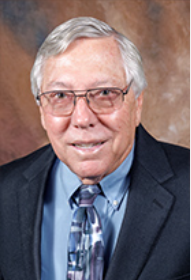

District 1 Governing Board member William Kiel requested a breakdown of property tax contributions and expenditures specific to the region. In response, Dr. Clint Ewell, the College’s Vice President of Administration and Finance, admitted, “Unfortunately, I don’t know the answers to either of those questions.” He added that the 125-page budget document provided to the Board does not “split apart the budget,” concluding, “I don’t have a way of answering that question today.”

Kiel noted that this was a repeated request, saying, “It’s a question I’ve asked in the past that I’d like an answer to.” Dr. Ewell responded, “I think in the past when you asked, we did answer it, but I had no warning today that you would ask that question again.”

Kiel further stated that he had requested a meeting with Dr. Ewell prior to the hearing to discuss the budget in detail but received no reply. “I was hoping somebody would have researched it by now,” he said.

Board Chair Deb McCasland, who appeared intent on limiting Kiel’s line of questioning, interjected that she believed the percentage from Sedona and the Verde Valley was approximately 28 percent, a figure Dr. Ewell tentatively agreed might be correct.

The inability—or unwillingness—of College leadership to provide a clear accounting of how much Sedona and Verde Valley residents contribute in property taxes, and how those funds are reinvested locally, continues to raise concerns about transparency and equity. For residents who supply a substantial portion of the College’s annual revenue, the lack of detailed financial accountability reinforces longstanding frustrations about underrepresentation and marginalization in institutional planning and decision-making. As calls for greater fiscal clarity grow louder, the question remains whether Yavapai College will deliver the answers its rural taxpayers deserve.

YAVAPAI COMMUNITY COLLEGE’S CHAPTER OF THE FUTURE BUSINESS LEADERS OF AMERICA COLLECTED SEVERAL INDIVIDUAL COMPETITIVE AWARDS AND CHAPTER HONORS IN DALLAS LAST WEEK

The Chapter is dedicated to fostering student  business skills

Yavapai Community College’s chapter of the Future Business Leaders of America (FBLA)—an organization dedicated to developing student business and leadership skills—earned multiple individual and chapter honors at the national FBLA conference held last week in Dallas, Texas. This marked the College’s first appearance at a national FBLA conference in 24 years.

“It’s great to receive this kind of national recognition,” said FBLA Advisor Deanna Baker in the College’s June 9, 2025, press release.

Yavapai’s four-member team was named a 2024–25 Distinguished Chapter, one of only eleven collegiate programs nationwide to earn this designation. The chapter also received the Golden Seal Chapter Award, an honor granted to just 15 percent of FBLA chapters across the country. In addition, the team was recognized as Arizona’s Outstanding Chapter of the Year, and Baker was named Arizona’s Outstanding FBLA Advisor of the Year.

The students also competed in a range of individual contests against the nation’s top FBLA talent. Luke Smith placed in the top 12 out of 47 competitors in the Job Interview event. Jackson James earned seventh place among 39 participants in Impromptu Speaking.

For more details about the Yavapai College FBLA chapter and its achievements in Dallas, visit yc.edu/v6/news/2025/06/fbla.html.

BOARD MEMBER PAYNE SAYS HE WAS NOT NOTIFIED OF YAVAPAI COLLEGE CEREMONIES AND DEDICATIONS –BOARD ADMINISTRATIVE ASSISTANT APOLOGIZES

Payne calls for improved communication and more effective response to his requests from Board Leadership

Third District Representative Toby Payne

Yavapai Community College District 3 Governing Board representative Toby Payne says he has been  repeatedly overlooked when it comes to notification about events and his requests for meetings—and he’s calling for improved communication and a more effective response to his requests from the District Governing Board leadership.

Third District Governing Board Toby Payne, who represents Sedona, the Verde Valley, and areas stretching nearly to Camp Verde, raised his concerns during the District Governing Board’s all-day “self-assessment” session on May 29, 2025.

“I’m very concerned about not being invited to various events,” Payne told the board. “When I first joined the Board, we were notified of events and had the opportunity to participate. We’re not getting that anymore.”

Among the events Payne said he was not invited to attend  were all spring graduation ceremonies and the recent dedication of the Prescott Pines campus. “I didn’t even know the dedication was happening,” he said. “I voted for the project. At the very least, I should have been informed of the date. I’m having a real problem with the fact that I’m not being included.”

“Even the graduation on this side of the mountain,” Payne added, referring to the Verde Valley area, “I wasn’t invited to it.”

The Community College’s Administrative Assistant to the Board, Yvonne Sandoval—who also serves as the executive assistant to President Lisa Rhine—took full responsibility for the communication breakdown.

“I want to sincerely apologize,” Sandoval said during the meeting. “The reason you weren’t included in the commencement email was because I misunderstood. I thought you had said you would be on vacation, and that’s why I didn’t send the invitation.”

She also acknowledged failing to notify Payne about the Prescott Pines dedication. “This is not an excuse, but I was a one-woman show when the invitations went out. It was my oversight, and mine only. I am sincerely sorry, sir. The responsibility falls directly and solely on me.”

Payne also indicated his concern with how his request for a Board meeting to iron out difficulties made back in January was ignored. “I tried, I tried to take and say that we needed to get together back in January,  and I really felt that it was important,  and important to me because I’ve done work, study sessions. . . . And I know that’s how the boards come together, but we haven’t been doing that. and it’s important. It’s important for us to be able to work together. . . . I know that’s how the boards come together, but we haven’t been doing that.”

Payne suggested that all future events that could involve a District Governing Board member, be put on a calendar so all members can see them well in advance of their happening.

Payne’s concerns highlight the tensions over communication and inclusion within the Community College’s governing structure, particularly between board members representing Sedona and the Verde Valley and those from the Prescott area. His experience underscores a broader pattern of marginalization that many in the Verde Valley have long suspected but few in power seem willing to address.


CATHERINE “CATHY” KEFER NAMED YAVAPAI COMMUNITY COLLEGE TEACHER OF THE YEAR

Recognized as a 2025 GIFT (Great Ideas For Teaching) Fellowship winner, she held  an adjunct nursing faculty position at the College  for only two years

Catherine “Cathy” Kefer was named Yavapai Community College’s Teacher of the Year at this year’s nursing pinning ceremony. She was recognized as a 2025 GIFT (Great Ideas For Teaching) Fellowship winner. A Gift Fellowship winner is Yavapai’s equivalent of teacher of the year award.
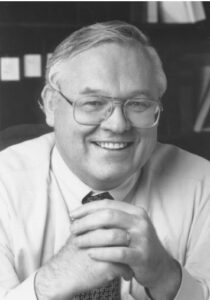

 A nurse with 46 years of experience, Ms. Kefer came out of semi-retirement two years ago while temporarily filling in for physicians at a Prescott oncology clinic. During that time, she applied for and was appointed as an adjunct nursing faculty member at Yavapai Community College.

Despite her relatively short tenure, Ms. Kefer no doubt made a clear and lasting impact on the strength and spirit of Yavapai’s nursing program. The “tough love” approach she brought to her teaching will be missed. Reflecting on the GIFT award, she remarked, “They really did get it. They really did kind of appreciate the tough love mentality they always complained about. It makes me happy that they appreciated it.”

The Community College press release dated June 5, 2025, described the intensity of Kefer’s  return to teaching two years ago: long days in the classroom, crisscrossing Northern Arizona to support students at clinical locations, and late-night and weekend correspondence with anxious students. “I’m not one to ignore it—a text or a phone call from a student. I can’t do that,” Kefer said. “So you’re working seven days a week.”  The commitment left her with limited time with family and her favorite pastimes, such as cooking and gardening.”

“I’m ready for more free time with my husband, my kids, and grandkids. It’s time to step back a little bit,” she added. “I’d like to sleep in until maybe 6 a.m.”

You may read more about Ms. Kefer in the Community College press release at https://www.yc.edu/v6/news/2025/06/kefer.html.

EFFORT TO RESTRICT BOARD MEMBER KIEL’S BUDGET QUERIES HIGHLIGHTS TROUBLING POWER PLAY AT MAY 27 MEETING

Deeply troubling—if not outright alarming—to witness how Yavapai Community College District 1 Governing Board Representative William Kiel was treated during the May 27 public budget hearing

Robert E. Oliphant

Opinion: It was deeply troubling—if not outright alarming—to witness how Yavapai Community College District 1 Governing Board Representative William Kiel was treated during the May 27 public budget hearing. Rather than an open exchange about questions involving  $120 million in the mostly taxpayer funded budget the Board was being asked to approve, the meeting resembled something like a scripted stage production—where the Chair appeared determined to silence meaningful inquiry and bend the process to her will.

From the outset of the meeting, Chair Deb McCasland unilaterally imposed a five-minute time limit on Board members wishing to raise questions and discuss the budget. This arbitrary cap was never discussed or approved by the full Board—yet Ms. McCasland was determined to enforce the limit with the vigilance of a sentry guarding the walls against unwelcome scrutiny.”

Mr. Kiel, rightly concerned about the limitation, voiced his objection and asked for more time. McCasland offered a vague concession: perhaps there would be a second round of questions “if time allowed.” Unsurprisingly, she later declared there was no need for a second round, thereby eliminating any further opportunity for scrutiny of the budget.

Mr. Kiel at meeting showing time left to speak on stopwatch.

As Kiel pressed forward during his allotted minutes—armed with a stopwatch, no less—McCasland repeatedly interrupted him, declaring his time had expired. Kiel protested, and the Governing Board’s attorney intervened in his defense, affirming that time remained. Even then, McCasland continued to cut him off, only to be overruled by the attorney once again.

This was no mere misunderstanding. It resembled a calculated effort to muzzle a Board member charged with asking hard questions on behalf of the public. The imagery was striking: one lone voice attempting to speak truth in a room determined to turn down the volume.

Equally disconcerting was Mr. Kiel’s assertion that he had reached out prior to the meeting to the College’s Vice President of Finance and Administration for help with budget questions, only to be ignored. When this was raised, College President Dr. Lisa Rhine interjected, denying receipt of such a request. However, Kiel clarified that the request had been sent to the Board Chair. McCasland vaguely acknowledged the request was made at a previous meeting but offered no explanation as to why it was not acted upon. The tone, in my judgment, from both the Chair and the President, in that moment, could only be described as dismissive—if not somewhat overtly hostile.

That a duly elected Board member would be treated in such a fashion—during a public meeting about how to spend $120 million in public funds—should alarm every citizen of Yavapai County. What we witnessed was not transparency. It was a power play—an attempt to micromanage discourse and limit oversight. For some, it bordered on a suppression of free speech. For others, it was simply a disgrace.

In either case, it was a poor performance from those entrusted to lead. Public institutions are not private kingdoms. When dialogue is silenced and accountability sidestepped, it’s not just one Board member who suffers. It’s the public trust that takes the blow.

It is worth noting that during the Board’s regular business meeting, which immediately followed approval of the budget, Representative Kiel requested that the draft minutes of a prior meeting explicitly reflect that Board members were limited to “two minutes” to ask questions. Although the statement was factually accurate, his motion was defeated in a 3-2 vote. The majority contended that the meeting’s video recording sufficiently demonstrated the time constraint, rendering the amendment unnecessary. Mr. Kiel remarked that every motion he has made has been consistently rejected by the same three Board members. (See video clip.)

You may view clips of Mr. Kiel struggling with the time issue at the May 27 meetings below:

YAVAPAI COMMUNITY COLLEGE DELIVERS TOP-TIER VALUE IN ARIZONA HIGHER ED LANDSCAPE

By keeping tuition low, the College ensures that many residents can access transformative, affordable education

Yavapai Community College continues to be one of the best  values in Arizona’s higher education landscape. By maintaining some of the lowest tuition rates in the state, the College ensures that many residents can access affordable, high-quality education. This commitment makes college attainable for  many individuals, and empowers them with the tools and opportunities needed to transform their lives, support their families, and contribute meaningfully to their communities.

In a press release dated May 27, 2025, the Community College listed what it considered several of its highlights.  They included the following claims:

    • YC’s base tuition rate is $113 per credit hour, and YC has no fees, making the tuition price the third lowest in the state of Arizona
    • Full-time students receive a discount and only pay $1,356 for a 15-credit semester
    • Yavapai College tuition is 80% below the Arizona public university average for full-time students, saving students approximately $9,000 per year in tuition and fees alone
    • YC’s tuition is 36% below the national community college average for full-time students and 23% below the national community college average for part-time students
    • YC’s cost per student is at the national community college average
    • 65% of YC programs lead to a living wage job
    • YC now offers four bachelor’s degrees, including a Bachelor of Science in Business, a Bachelor of Science in Nursing, a Bachelor of Science in Computer Science, and a 92-credit Bachelor of Applied Science in Business
    • In addition to the full-time student discount, YC offers a dual-enrollment discount for high school students at $10 per credit, a concurrent enrollment discount for high school students at 50% off online classes, and a senior citizen discount at 50% off credit classes.

You may read the complete press release at https://www.yc.edu/v6/news/2025/05/tax.html.


PUBLIC INTEREST IN YAVAPAI COLLEGE’S $120 MILLION BUDGET HAS EITHER VANISHED OR HAS BEEN QUASHED AS NO RESIDENTS APPEAR

While the District Governing Board members comfortably zoomed into their  $120 million budget talks from home or elsewhere, residents in a county larger than El Salvador who wanted to comment at the public hearing on the budget were told to trek to the Rock House on the Prescott Campus if they wanted a say

Opinion:  The Yavapai Community College District Governing Board held its Budget Public Hearing on May 27, 2025, via Zoom—with one glaring exception. Any resident wishing to raise a question or praise the budget was required to drive to the Rock House on the Prescott Campus, as Zoom participation was strictly off-limits for public comments.

No residents showed up in person to comment.

The decision to not allow the public to comment via zoom was  apparently made by the Board Chair, Deb McCasland well ahead of the meeting. It was made without a Board vote on the process. Seen from the outside, the process gives the impression of outright contempt for the County’s residents.

Board members, or the Chair Deb McCasland, must be blind to the fact Yavapai County covers 8,125 square miles and compares in size with Connecticut, Delaware, Rhode Island and New Jersey.  It is about the size of the nation of Israel and larger than El Salvador.   It is only slightly smaller than Maricopa, County, Arizona. Maricopa covers 9,224 square miles and is the fourth largest county in the United States.

The County is divided by the Black Hills mountain range that runs west and east with Mingus mountain creating a natural physical barrier between the two sides of the County. There are few roads connecting the concentrated population centers in the west region of the County with the more rural areas in the east. For many, the most direct route in the east region to the west region is a single-lane alternate highway 89-A. It somewhat perilously crawls over Mingus Mountain at 7,815 feet.

Is the Governing Board blind to the struggles of the very people it’s supposed to represent? Yavapai County is home to one of Arizona’s largest elderly populations, alongside many disabled individuals and working residents who can’t take time off to travel to Prescott for a three-minute comment. Zoom participation isn’t just practical—it’s common sense!

The requirement for in-person attendance at the Rock House on the  Prescott campus when Zoom is available to comment on the $120 million budget effectively barred residents from participation, if anyone was interested. This restrictive approach—whether a calculated maneuver or an act of negligence—all but assured that the public would not be heard at the so-called “Budget Public Hearing.”