Students in some healthcare training programs treating Medicare and Medicaid patients will be required to be vaccinated after Supreme Court ruling January 14
 Yavapai Community College will reopen on Tuesday with in-person classes without any mitigation mandates. It does offer a series of recommendations that it encourages students and staff to follow. (See below)
It is possible that some of its students in its healthcare training programs may be required to be vaccinated. This is particularly true if the students do clinical training in a facility of any kind that participates in the Medicare and Medicaid program. The reason for this is that the Centers for Medicare & Medicaid Services announced in September its intention to require hospitals, dialysis facilities, ambulatory surgical centers and other facilities to vaccinate their staff as a condition for participating in Medicare and Medicaid.
The mandatory vaccination requirement was challenged in court. Last Friday, January 14, the Supreme Court narrowly upheld the requirement in a 5-4 decision.
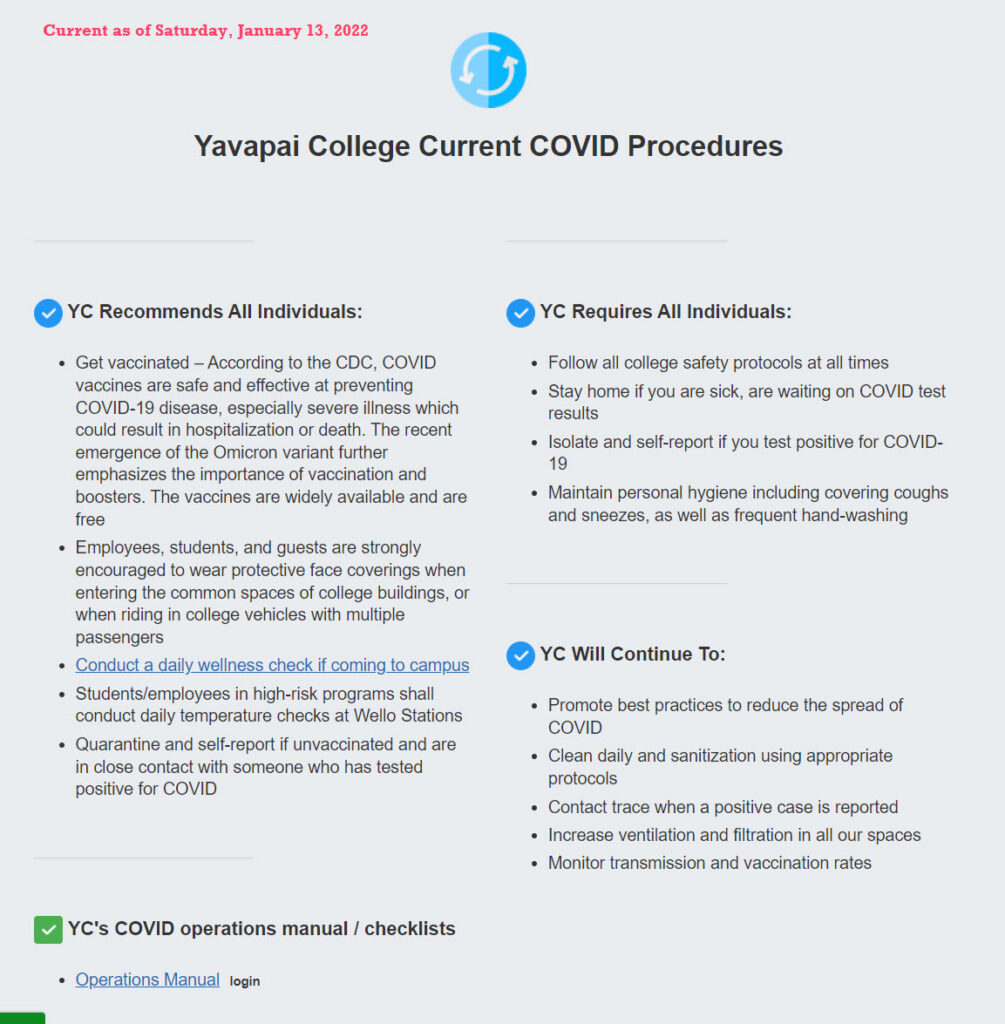
 On Wednesday, January 5 Yavapai Community College President Lisa Rhine announced the Covid-19 mitigation strategy for the spring semester. There are no mandates for masks or vaccinations for staff, faculty, and students — only recommendations. In her announcement Dr. Rhine stated that “The major change in the new CDC guidance is the reduction of quarantine and isolation times from 10 days to five days. This change is now reflected in the College’s COVID-19 operating manual and safety protocols.”
 Back in November 2021 Maricopa and Pima Community Colleges stated that they were going to require employees to be fully vaccinated against COVID-19 to meet federal mandates under the Occupational Safety and Health Administration (OSHA) mandate . The community colleges were following President Joe Biden’s executive order based on OSHA for federal contractors, which requires all employees to be fully vaccinated, with limited accommodations.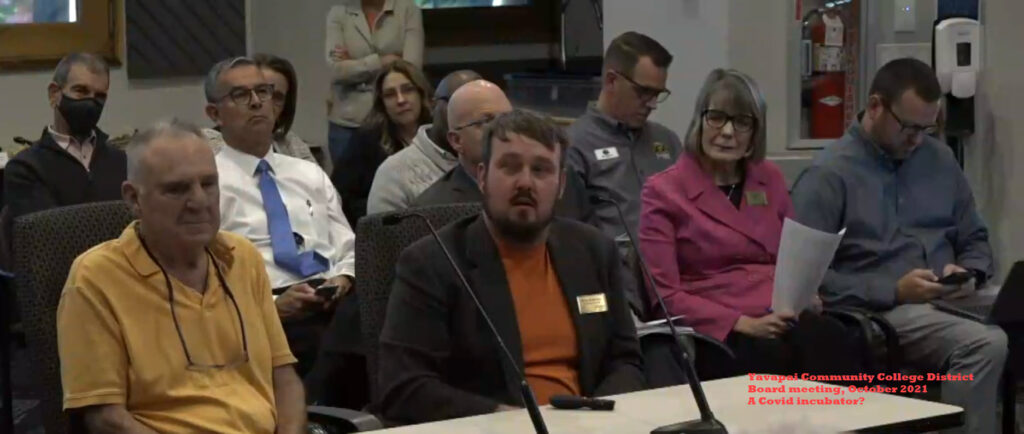
 On November 2, 2021, the Arizona Supreme Court, after only two hours of deliberation, found that several provisions of the 2022 state budget, including a controversial ban on face mask mandates in K-12 schools, violate a provision of the state constitution requiring individual bills to encompass a single subject.