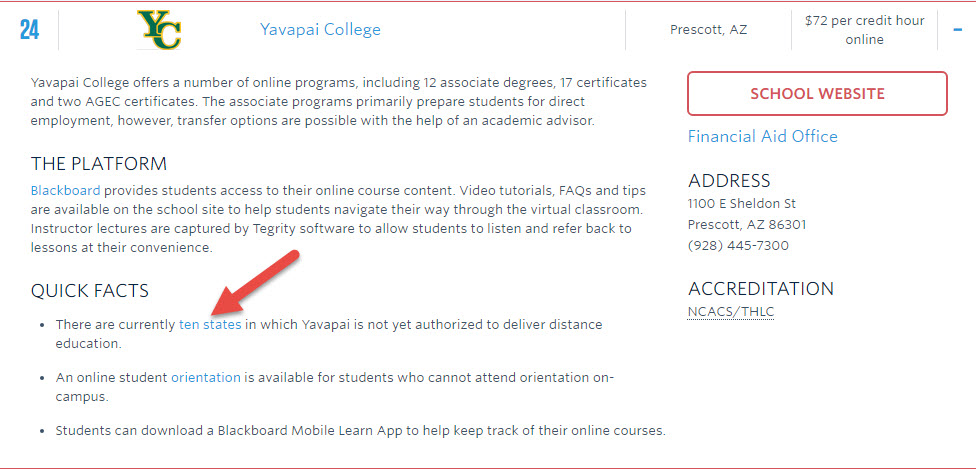
College claims that most online students “are part-time adult learners, attending classes amidst other priorities including family and jobs.” New B.S. in nursing and LPN program will be online in the fall
 Online courses and programs have become an increasingly important delivery mechanism for Yavapai Community College. In fact, one might argue its current and future survival appears to rest on ensuring it has large numbers of outstanding online courses.
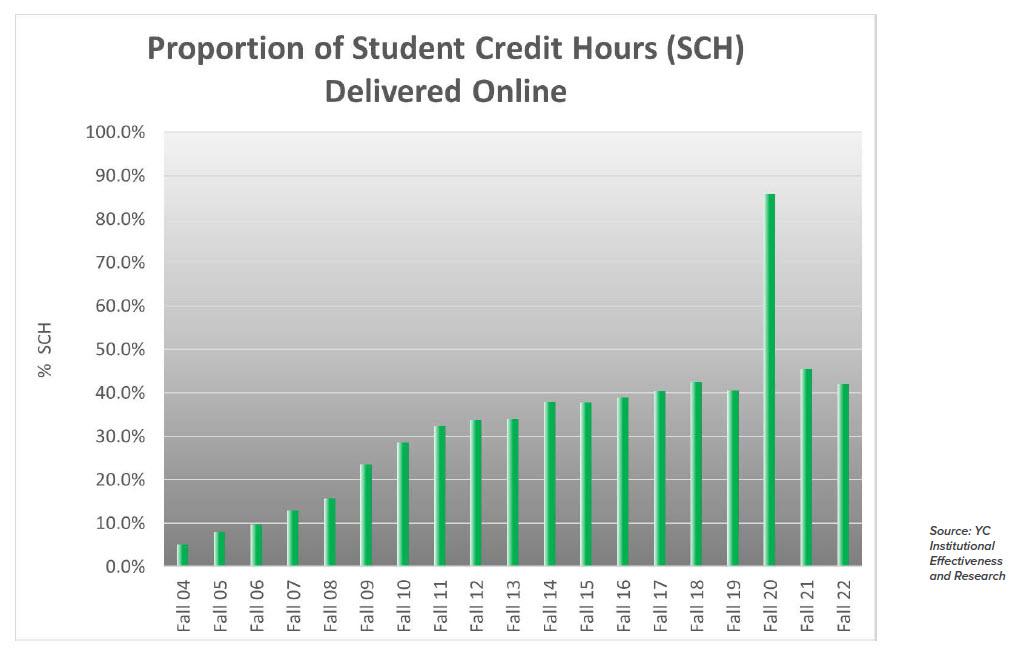
Data delivered to the Yavapai Community College District Governing Board in April showed over 40% of credits are now obtained online. Although it produced no hard analytical data supporting its claim, it asserted that most online students “are part-time adult learners, attending classes amidst other priorities including family and jobs.”
The new Bachelor of Science in Nursing, as well as an LPN program, will be launched in the Fall of 2023. The coursework will be offered online, and intends to target Community College RN graduates who would like to upgrade their skills and credentials.
Good online learning opportunities depends on at least three things: First, the quality and stability of the technology used to deliver the online course. Second, the quality of the course content. Finally, the training and collateral support of faculty who develop a course and then teach it online.
Yavapai Community College was an early adopter of online technologies, beginning almost 23 years ago. Since then, it has invested large sums of money in technology, software and support services to improve the quality of our online offerings.
There remain fundamental unanswered debatable questions about the quality of an online learning experience for a student versus face-to-face classroom learning or a hybrid online experience mixed with some face-to-face classroom learning experiences. The answer about which learning environment is better, so far, is incomplete and generally unsatisfactory. A common response is that how learning occurs seems to turn on the specific learning characteristics of each individual student and the quality of the faculty member delivering the material. Some students appear to thrive in an online environment. Others, however, appear to need in-person classroom instruction in order to achieve their maximum potential for learning.
As more and more quality online learning opportunities appear from universities, colleges, and private enterprises, and the model of education delivery is being forever altered, the challenges for the Yavapai Community College administration are many.
 The just released draft report issued by the Yavapai Community College Strategic Planning Committee confirms what serious educators are concerned about when it comes to online learning. The report cites a number of areas where online learning at Yavapai Community College is falling far short of the goal of excellence.