Total enrollment of 26 when program could enroll 44; does it need additional leadership help from high schools and College to help with underserved population and others?
[A BLOG SPECIAL REPORT.] President Penelope Wills reported to the District Governing Board at its June meeting that a total of 26 high school students had enrolled in the LEAD program this year. There were 11 students from the Verde Valley and 15 students from Prescott. Wills gave few other details regarding the program. (See video below.) She said the program will continue.
The eight-week LEAD program is intended to pave the path for students who express interest in college but for various reasons might never make it. It was designed in cooperation with the Yavapai County Education Service Agency specifically for graduates who face distractions in their life outside of school that may create barriers to continuing their education.
Former Yavapai College Vice President for Instruction and Student Development, Dr. Stuart Blacklaw, said: “The Lead seeks to create an environment that leads to a successful start in college. Some students have no trouble moving from high school graduation in the spring to college matriculation in the fall. Others find those intervening months filled with distractions. The Lead program is designed to move college-minded students directly to campus after high school graduation, before life elements deter them from their college aspirations.”
Given that the program it is free and aimed at a particular segment of the high school graduates who without it might not attend college without it, does it need additional emphasis by the administration to obtain full enrollment?
The blog is concerned that all 44 possible seats were not filled in any of the three years of the program. This is a concern because the program can apparently provide educational opportunities for the underserved population of students that Wills and others claim they worry about.
Background: When former Yavapai Community College Vice President for Instruction and Student Development Stuart Blacklaw created the LEAD program, it was designed to accept from 15 to 22 students annually in the program on each side of Mingus Mountain (total 30 to 44). Participation is completely free for students — the costs of courses, books, meals and activities are all covered. Students have the opportunity to earn 6 college credits and participate in college preparation activities.
Housing difference: The program is offered at both the Verde Valley and Prescott campuses. However, there is one big difference between the settings of the program: On-campus housing and meal plans are provided for students participating at the Prescott campus. No housing was provided for students participating on the Verde Campus. Participants are responsible for their transportation to and from the program – any transportation required during program activities will be provided.
2015 Enrollment: In 2015 the program enrolled 12 students on the Verde Campus, according to Executive Dean Dr. James Perey. He reported that there were 3 students from Camp Verde and 9 from Mingus Union High School. There were no applications coming from Sedona Red Rock High School. On the Prescott side, where students are provided free dormitory rooms and food, it attracted 24 students. Of the 24 students who are living in dorms on the Prescott side of the County, two are from Camp Verde High School and two from Mingus Union High School.
2016 Enrollment: In 2016 there were 14 students enrolled on the Verde Campus for the LEAD program. For the first time, it included two students from Sedona Redrock high school. The Blog has been unable to obtain any information about the number of students enrolled on the Prescott side, if any. Because of the absence of any press releases regarding the LEAD program on the Prescott side of the County, the Blog assumes it was not run on that side in 2016. In addition, a request for information about 2016 funding the program made to the Foundation was ignored.
2017 Enrollment: President Penelope Wills reported to the District Governing Board at its June 13, 2017 meeting that 11 students had enrolled in the program on the Verde Campus. She also reported that 15 students had enrolled on the Prescott Campus. You may view her one-minute report to the Governing Board on the video below.
Financing: In 2015 “The Yavapai College Foundation provided over $60,000 to fund the LEAD program in its entirely because we feel strongly that helping at-risk youth who have academic potential and want to attend college overcome personal challenges is an important step in helping the next generation succeed,” said Paul Kirchgraber, Director of Development for the Foundation. It received a substantial amount of grant money from the American Association of University women.
However, since its first year, neither the College nor the Foundation have provided any financial details. Dr. Blacklaw indicated in 2015 that the College could use federal TRIO funding to support the project. Unless the College releases financial data regarding how this program is supported, the residence of Yavapai County will be left in the dark.
See Dr. Blacklaws’ six-minute explanation of the program below.
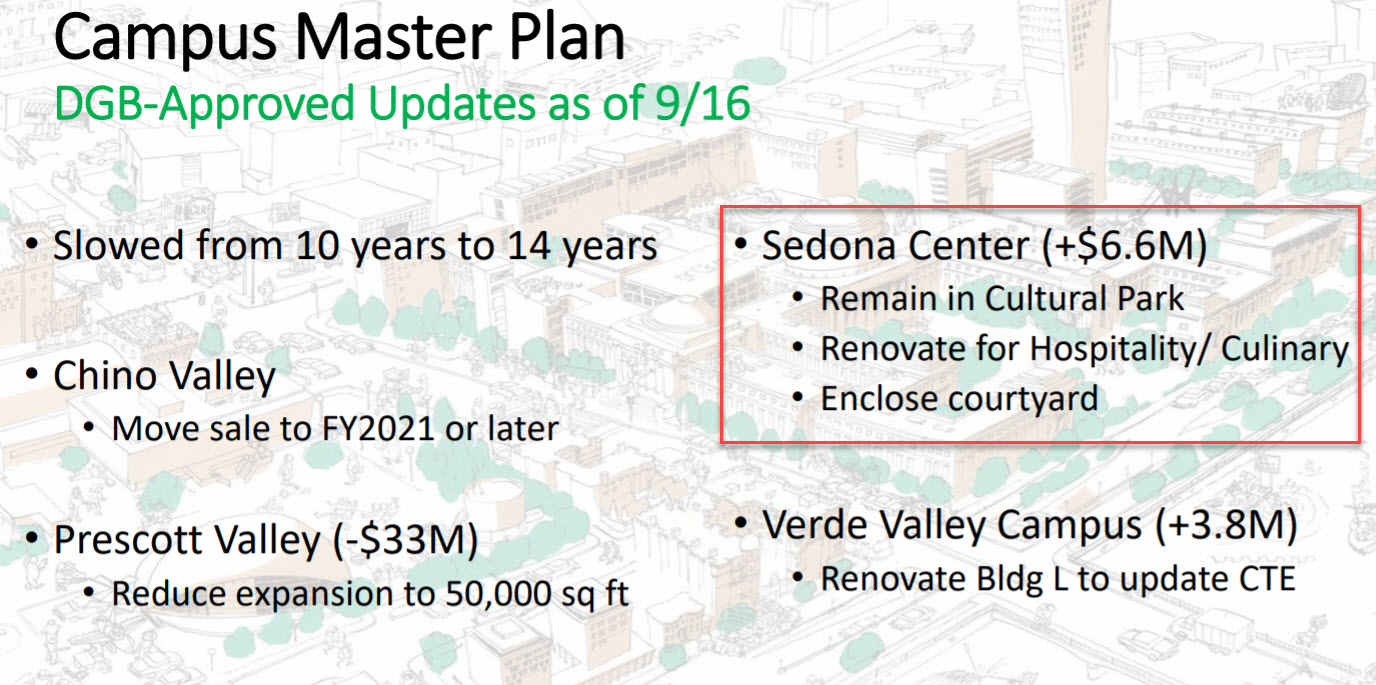
Sedona officials and Verde Valley citizens forced College to retract original decision to potentially sell the Center; it is now a “key component” of “master plan”
Per an article appearing in the Verde independent on July 11, 2017, which was apparently provided by the Community College public relations department, the College claims “The Sedona Center expansion is a key component of the college’s master plan.” Click here to read the article in the Verde Independent.
The article also says that the Sedona Center “addresses the growing demand for graduates with culinary and hospitality skills. Sedona and its Verde Valley neighbors attract millions of tourists annually who are lured by the unique scenery, myriad cultural attractions and a flourishing wine industry.”
What a change from December, 2013 when the Governing Board approved potentially selling the Sedona Center and pocketing the money to build a huge allied health facility in Prescott Valley. Both the plan to sell the Center and the plan to build a huge allied health facility collapsed.
You may click here to read the March 2016 Master Plan update.
SATURDAY, JULY 15 FROM NOON TO 2:00 P.M
A “barrel tasting event” will be held on the Verde Campus at the Southwest Wine Center from noon to 2:00 p.m. on Saturday, July 15. Admission is $20 at the door, which includes tastings and small bites. The College says it will be tasting a number of unreleased 2016 reds during the event. The Center is located at 601 Black Hills Drive, Clarkdale, Arizona. Its normal hours are from noon to 6:00 p.m. Thursday through Sunday.
Hotel management and hospitality and restaurant management and hospitality still looking for students
Per a story written by Zachary Jernigan in the Sedona red Rock news, Wednesday, July 12, 2017 the culinary courses that are being offered at the Sedona Center are already full. This is five weeks before the semester begins. However, the hotel management and hospitality course and restaurant management and hospitality course are still looking for students to sign up.
You may read the entire story in the Red Rock news by clicking here.
Blog lists 15 excellent sources of internet information about community colleges for summer viewing and reading with an emphasis on the Verde Valley and Yavapai College
There is a plethora of information about community colleges that anyone interested in post-secondary education has at his or her fingertips on the internet. The following is a list that was originally compiled by the Verde Valley Forum on “The Role of Post-Secondary Education in the Future of the Verde Valley Region” in September 2016. It was distributed to all of its participants. The Blog believes it is a great source of information and is regenerating it for its readers to use during the summer.
1. Robert Putnam’s book talk: “Our Kids – The American Dream in Crisis” (On Youtube.) Click here to go to the YouTube site.
2. Josh Wyner’s book talk: “What Excellent Community Colleges Do – Preparing All Students for Success.” (On Youtube.) Click here to go to the YouTube site.
3. ASU Morrison Institute 2013 report: “On the Rise – The Role of Career and Technical Education in Arizona’s Future”. Click here to go to the internet site.
4. ASU Morrison Institute 2016 Forum Background Research Report: “The Role of Postsecondary Education in the Future of the Verde Valley Region.” Click here to go to the internet site.
5. Highlights of the April 2013 Arizona Town Hall: “Is Higher Education Ready for Arizona’s Future?” Click here to go to the internet site.
6. Aspen Institute Report: “Structural Equity: Big-Picture Thinking & Partnerships That Improve Community College Student Outcomes.” Click here to go to the internet site.
7. Georgetown University Center on Education and the Workforce Report: “America’s Divided Recovery – College Haves and Have-Nots” Click here to go to the internet site.
8. The Brookings Institute article: “Not Just College – Technical Education as a Pathway to the Middle Class,” Click here to go to the internet site.
9. The Association of Community College Trustees White Paper: “Clearing a Path to a Brighter Future: Addressing Barriers to Community College Access and Success.” Click here to go to the internet site.
10. The Arizona We Want overview: Click here to go to the internet site.
11. The Center for the Future of Arizona – list of reports: Click here to go to the internet site.
12. Information on Yavapai College Strategic Plan, and Strategic Plan for Yavapai College in the Verde Valley: Click here to go to the internet site.
13. Information on training and education programs offered by Brighton College, the institution that the Yavapai-Apache Nation is using for online vocational training: Click here to go to the internet site.
14. Information on the University of Arizona’s plans to establish a branch of their College of Agriculture at the DK Ranch site in Cornville, AZ: Click here to go to the internet site.
15. Information on degrees and certificates offered by public post-secondary institutions:
Northern Arizona University. Click here to go to the internet site.
Coconino Community College. Click here to go to the internet site.
Yavapai College. Click here to go to the internet site.
College provides little information about Cornville facility; claim is University asking now how it should be used
When the Steele Foundation announced in July two years ago that the University of Arizona would be the recipient of the 45.7-acre DK Ranch in the Verde Valley for a veterinary medical and surgical school, it was described as a win-win for the University and Yavapai Community College. President Penelope Willes was quoted in an interview in the Verde Independent that she was “confident that many of the programs that we had included in our proposal will be part of the plan going forward.” (Click here to read her statement to the Verde independent.)
However, so far there has been no indication that the Community College has introduced new programs at the Ranch. In an April 13, 2017 commentary in the Verde Independent, Camp Verde town Council member Buck Buchanan wrote that he had toured the Ranch “with other elected and appointed policy makers.” He went on to state that “The announcement of the gift in 2015 created expectation for more educational opportunities in the Verde Valley. What has happened since? Not much. The ranch is well-kept, but not well-used.” (You may read his commentary by clicking here.)
Mr. Buchanan also wrote that “Predictions of affiliation with the Veterinarian School have not materialized. Now the University is asking for input as to how the ranch should be used.”
President Penelope Wills has remained silent on the project. Although one would expect regular detailed reports on the Ranch project to the District Governing Board, no such reports have been forthcoming. So what is the status? Nobody knows. Mr. Buchanan suggests the project is back to the drawing board.
Programs wow appreciative Prescott residents; Yavapai student attendance appears sparse
The Performing Arts Center on the Prescott campus was built and significantly upgraded with the help of Verde Valley property tax revenue. Although some persons from the Verde Valley attend the events at the Center, the overwhelming audiences appear to consist of appreciative Prescott area folks. It also appears to the Blog that a very small number, at best, of Yavapai Community College students attend the events.
The following is a list of a few of the outstanding programs over the next few months at the Center on the Prescott Campus. (Note the one program scheduled for Camp Verde.)
- National Theater Live, Hamlet, July 6, 2017 6 PM.
- Prescott Pops Symphony, Pops and Patriots, Sunday, July 9, 2017.
- Prescott POPS Symphony 2017-2018 Sunday, July 30, 2017 3 PM The Music of Rodgers & Hammerstein and Andrew Lloyd Webber.
- National Theater Live, Peter Pan, August 3, 2017 6 PM.
- 30th Annual Arizona Cowboy Poets Gathering, featuring Dave Stamey, August 10, 2017, 7 PM.
- 30th Annual Arizona Cowboy Poets Gathering, featuring Trinity Seeley, August 11, 2017 7 PM.
- 30th Annual Arizona Cowboy Poets Gathering, featuring Don Edwards, August 12, 2017 7 PM.
- Prescott Jazz Summit, Prescott Jazz Summit all-star big-band, August 26, 2017, 7:30 PM.
- The off-Broadway hit comedy “Men are from Mars, Women are from Venus,” performed live September 8, 2017 at 7:30 PM.
- BILL BLAGG’S THE SCIENCE OF MAGIC, Wednesday, September 20, 2017 | 9:30 am & 11:30 am Camp Verde, AZ .
- Thursday, September 21, 2017 | 9:30 am & 11:00 a.m. at Performing Arts Center.
- MOON MOUSE, A SPACE ODYSSEY, Wednesday, October 18, 2017 | 9:30 am & 11:30 am. Best for grades K-4.
- THE OKEE DOKEE BROTHERS, Thursday, November 2, 2017 | 9:30 am & 11:30 am. Performing arts Center.
-
Other future concerts include: The Beach Boys, The Texas Tenors, The Price is Right Alive! Scotty McCreery, Garrison Keillor and much more.

Yavapai College alone among colleges at program dominated by credit unions, hospitals, and nonprofits; Blog argues attending was a waste of taxpayer money
Community College president Penelope Wills and Governing Board members Pat McCarver, Ray Sigafoos, and Steve Irwin are avid supporters of the Carver™ model of operating the District Governing Board under what is called “policy governance.” It is a process that both former members of the Governing Board from Yavapai County’s Third District considered a process that stifled open communication and shielded the administration from total accountability to Yavapai taxpayers. Despite their protests, Wills’ and the West County representatives have shipped in Carver™ consultants to address the model at a number of Board retreats.
This year all five Governing Board members plus Wills and Karen Jones were sent to the June 22-24 policy governance convention in San Diego. The Blog has learned there were 160 attendees at the Conference but only one college—that was Yavapai. There were an additional 12 persons from six K-12 and private schools. The attendance was dominated by credit unions, nonprofits, city and state governments and hospitals.
One of the attendees at the Conference told the Blog that some meetings were “cult like.”
It is not clear how much it cost taxpayers to send the seven to the Conference. The individual fees alone as announced by the Conference ranged from $600 to over $700. It was reported to the Blog that Dr. Wills stayed around about 24 hours. It was also reported that Representative Irwin appeared sometimes missing as a participant at some Conference sessions. Hopefully, a detailed report from the President and each Board member regarding their attendance at the Conference will be made at the August Governing Board meeting.
All in all, from the Blog’s perspective, if the information it received is correct, sending the College seven-person delegation to a conference where some meetings were described as “cult-like” and no other colleges were in attendance was a waste of taxpayer money.

East County property taxes helped provide space for Mountain Institute office
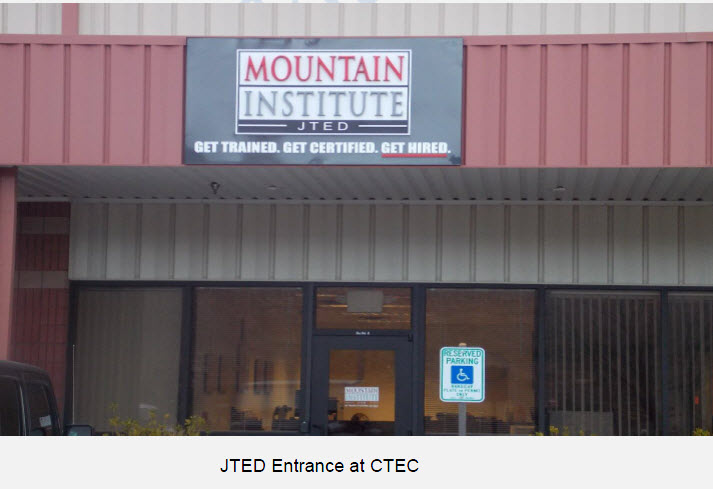
The District office of the Mountain Institute Joint Technical Education District is now located at Yavapai Community College’s Career and Technical Education Center at the Prescott airport. The institute provides and coordinates Career and Technical Education programs for high school students on the West side of the County. By locating within the CTEC facility, the Institute has an unparalleled opportunity to closely coordinate its JTED students CTE needs with the College offerings at the state-of-the-art facility.
Unfortunately, no Verde Valley high school JTED students and only a handful of residents have been able to take advantage of the state-of-the-art training offered at CTEC.
The Technical Education Center at the Prescott airport was made possible in part because of property taxes paid by East County voters; all of whom reside in the Verde Valley. Because the property taxes they generate pay for all the costs of operating the Verde Campus and Sedona Center, around $5.5 million each year is sent over the Mountain to be spent on projects on that side of the County. In addition, the West side is able to use tuition, state aid, government grants and other revenue generated by Verde Valley students on West side development. Only on a rare occasion when a capital project is created on the East side of the County does some of that money return to the Verde Valley.
The relationship developed between the Mountain Institute and the College over the past decade is a model of cooperation and development. However, as noted above, it would not have been possible without the taxpayer support from the Verde Valley. It is a model that should be emulated on the East side of the County for its 70,000 residents.
(JTED entrance photo from District Governing Board Agenda.)