
Opening reception, April 2

Ten-Year-Plan insulted Verde Valley taxpayers; it should be “halted”
Sedona resident Mr. Joel Staadecker told the Community College Governing Board at its March 3 meeting that approval in December, 2013 of the Ten-Year-Plan conveyed a profound insult on Verde Valley taxpayers. The insult was to develop a plan that called for spending 97% of the funds in West Yavapai County. After all, he said, around 40% of the property taxes supporting the College come from the Verde Valley while over 90% of the expenditure was going to occur in Prescott and Prescott Valley.
 He also asked the Board whether the new Sedona Center Parking lot and the Verde Valley Governing Board Advisory Committee are intended to merely placate Verde Valley residents until the “storm blows over.” Then, the Board can proceed with the Ten-Year-Plan unimpeded.
Mr. Staddecker said that the College is proceeding with the Ten-Year-Plan without any significant change. To him, it appears the College efforts are designed to placate the current uproar until the storm blows over.
He also asked the Board to either halt or scrap the Ten-Year-Plan given the opposition coming from the Verde Valley.
Mr. Staadecker’s address to the Governing Board can be seen and heard by clicking here.
Maricopa County Community College District will not raise tuition or property taxes
 The Maricopa County Community College District will not raise tuition and property taxes, even though a new state budget eliminates virtually all state funding for the district’s 10 community colleges. But hiring more full-time faculty may be put on hold.
Archeology Center Executive Director relates woes of dealing with Yavapai Community College
Ken Zall, Executive Director of Verde Valley Archeology Center, rolled out a long list of bad experiences his organization has suffered at the hands of Yavapai Community College at the District Governing Board meeting March 3. He charged the College has consistently showed a lack of interest and lack of cooperation in working with his organization. In frustration, the group turned to Northern Arizona University and the University of Arizona.
The Center, which has received numerous awards for its outstanding work, has 440 members from the Verde Valley. It recently received over $2 million dollars in a grant to build a new facility in Camp Verde.
He said that when the Center was created it had a Yavapai Community College representative. However, when that person left the College, the Center asked for a replacement. Zall said that it has been over two years since the replacement request was made and the Center is “still waiting” for the replacement to show up.
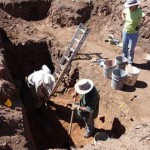 When the Film School was closed down, the Center contacted the Community College explaining it could create a school of archeology and geology. The Center met with College officials in Prescott who told them the proposal had a lot of possibilities. Then, two days later they saw a press release indicating the College was selling the Sedona Center. “The lack of candor at the [Prescott] meeting,” said Mr. Zall, “has left a very sour taste in our mouth.”
He also said that when the Center received notice it would receive $2.1 million dollars for a new Camp Verde facility it contacted the College inquiring whether it would like to participate. In response, the College named one representative who attended one meeting and did not follow up thereafter. Nothing more has been heard.
The Center also contacted the College suggesting there was an opportunity to create a certificate in archeology based on the successful model at Pima Community College. He said there were a couple meetings and the Center was “abruptly told” that the College saw no student base for this program. The Center adamantly disagreed with this assessment. However, the idea of a Community College certificate program for architecture and geology in the Verde Valley has apparently vanished.
Lacking cooperation from the local Community College run by Prescott, the Center has developed a relationship with NAU and has four graduate students working with it on projects. Additional students from NAU and the University of Arizona will be working with the Center this summer.
Despite the lack of cooperation from the College, the Director said door is still open for the Center to work with the College. You may view Mr. Zall’s presentation to the Governing Board by clicking here.
Film program on Verde Campus, not at Sedona Center
 The executive dean of the Community College Verde Valley Campus, James Perey, reported at the March District Governing Board meeting that a modified film & media arts program is being developed for the fall 2015 semester. This program along with culinary, hospitality and enology certificate programs, will be based at the Verde Valley Campus. He also said that he is seeking to find a way to offer welding and/or automotive programs “in conjunction with Verde Valley academic partners.”
More property taxes needed to continue financing $111 million dollar construction projects
The Community College promised at the March 3 Governing Board meeting that it would seek at least a 2 percent property tax increase this year. It noted that the tax rate had not been increased for two years.
 The College seeks the money so it can continue financing the construction projects it has decided are needed with about 90% or more of them on the West side of the County. Several are already in progress.
The College has experienced a continual decline in enrollment over the past several years. Therefore, from its view, student tuition and property taxes must make up the deficit resulting from the absence of student tution.
County voters are relatively helpless to prevent the tax increase unless three of the five District Governing Board members can be persuaded to not grant the administrators increase.
The administrators will put forth their justification for the increase at the April Board meeting and a vote will be taken in May. Unlike all other educational institutions in Arizona, the Governing Board has the power to increase property taxes with only a public meeting before the final vote is taken. In the past, any objection by the public at the public meeting to a tax increase requested by College administrators has been ignored by the Board.
Residents in the Sedona taxing district may well be among the most upset with the proposal to increase property taxes. With a tax increase, by 2016 that district will have paid close to $100 million dollars in property taxes directly to the Community College. Many in the taxing district feel they have received very little in return.
College Administration to ask for tax rate increase; funds needed to mostly support $111 million dollar construction projects on West side of County
The Community College administration made it clear at the March 3 meeting that it intends to ask the College Governing Board to approve a property tax rate increase this year. Vice President Clint Ewell suggested that the increase under the law could be as much as ten percent. However, he indicated that the administration will be asking for a 2% increase.
The increase in property taxes is justified by College administrators as needed to support the $111 million dollar ten-year expansion and renovation projects on the West side of the County. According to press reports, the College already believes it has $67 million in existing revenue toward the goal of $111 million. But it needs to fill the $46 million short-fall.
The tax increase follows the 3% student tuition and fees increase already approved by the Governing Board in a 3-2 vote at the March meeting.
Voters are essentially helpless to prevent the tax increase. There will be a public meeting just prior to the Board vote in May. However, because of work schedules and other commitments, those meetings have in the past been sparsely attended and opposition to the past tax increases ignored.
The Governing Board will receive more information about the proposed tax rate increase at the April meeting and will vote the request up or down in May. A short video clip of the tax rate statements made by Vice President Ewell will be posted here shortly.
Tuition money needed to keep $111 million dollar Master Plan construction on-track on West side of County gets West side Governing Board support
The Yavapai Community College Governing Board voted 3-2 to increase tuition next year by four percent. Without the increase, the College might have to cut out $400,000 of its $111 million dollar Master Plan construction plans. (No student voices were heard at the Governing meeting.) It also intends to raise dormitory rates by about 3 percent.
 Voting against the tuition increase was East County Representative Al Filardo, who was not convinced the College had made a proper supporting case for it. Also voting against the increase was second
  district East/West County representative Deb McCasland. Ms. McCasland was concerned about the impact on students and the massive expenditures going out of the General Fund for the Master Plan. The General Fund revenue comes from County taxpayer property taxes and student tuition.
Two factors driving Administrators to push tuition higher are the need to finance the $111 million dollar Master Plan and their five-year failure to increase enrollment. Over 90% of the Master Plan is going to develop the College on the West side of the County.
In January, 2015 the Administration reported that tuition and fees would be $150,000 under budget for the fiscal year because of “lower than projected enrollments.” The College estimated in January, 2015 that it would take in only $11,717,000.00 in tuition and fees along with about $44 million in tax revenue.
A year ago in-state student tuition for 2014-15 was increased by the Governing Board on recommendation of the Administration as follows:
• Tier 1: +$2 from $70 to $72
• Tier 2: +$5 from $78 to $83
• Tier 3: +$5 from $87 to $92
• $360k increase (3.2%).
The total increase for 2015-16 will be 4%.
Tier 1: + $3 from $72 to $75 (4.2%)
Tier 2: +3 from $83 to $86 (3.6%)
Tier 3: +3 from $92 to $96 (4.3%).
In addition, several new and existing courses will have tuition set at what the College describes as “market rates.”
Long-time West County Board members Ray Sigafoos and Pat McCarver led the fight for higher tuition. They have voted to increase student tuition for the past several years. Newcomer Steve Irwin, who represents Prescott Valley, voted for the first time to increase tuition.
In 2004/05 the per hour tuition was $38. It has been increased every year since then. Click on the following to read the details of the tuition increase. Tuition and Fees _ FY 15-16_r1
Bolshoi Ballet draws an audience of two on Verde Campus
The Bolshoi Ballet Swan Lake was shown at the Verde Campus, Building “M” on Sunday March 1. Only two persons showed up to see the production on the movie screen in room 137. (One of whom was the Blog.) There were three staff members on hand.
 The advertising for the event apparently began two days before the showing with a story in the Verde Independent newspaper. (Click here to go to the story in the Independent.) This is hardly adequate to allow persons to rearrange their schedules to attend.
The Community College says in its advertising the ballot was being “streamed live on the big screen.” In fact, the ballot was shown in Prescott on Sunday, January 25. The production was on the College’s hard drive, which made it possible to fast forward through the 25 minute intermission.
The College is advertising two other productions in late March as “streamed live on the big screen” when it is clear they are tape delayed presentations. Two of them found in the College flyer are the National Theatre Live: Skylight shown February 8 in Prescott and Bolshoi Ballet: Romeo and Juliet), which was shown March 1 in Prescott. These productions will be shown on March 28 and 29.
Two winners from Verde Campus; two from the Prescott Campus
 Four Yavapai Community College students were chosen for this year’s All-Arizona Academic Team. This qualifies them for a full-tuition scholarships to continue their studies at any state university.
Honorees are Aubrial Harrington and Ashley Knister from the Verde Valley Campus, and Raymond Rosas and Brittany Sheldahl from the Prescott Campus. Rosas was selected to the first team, Harrington and Sheldahl to the second team and Knister to the third team.
Because he was a first team selection, Raymond Rosas qualifies for the College Team, which puts him in the running for an additional $2,500 cash award, trophy and national recognition through coverage in USA TODAY and usatoday.com.
A Yavapai Community College committee makes the awards of All-Arizona scholarships based on a combination of academic achievement, leadership and community service.