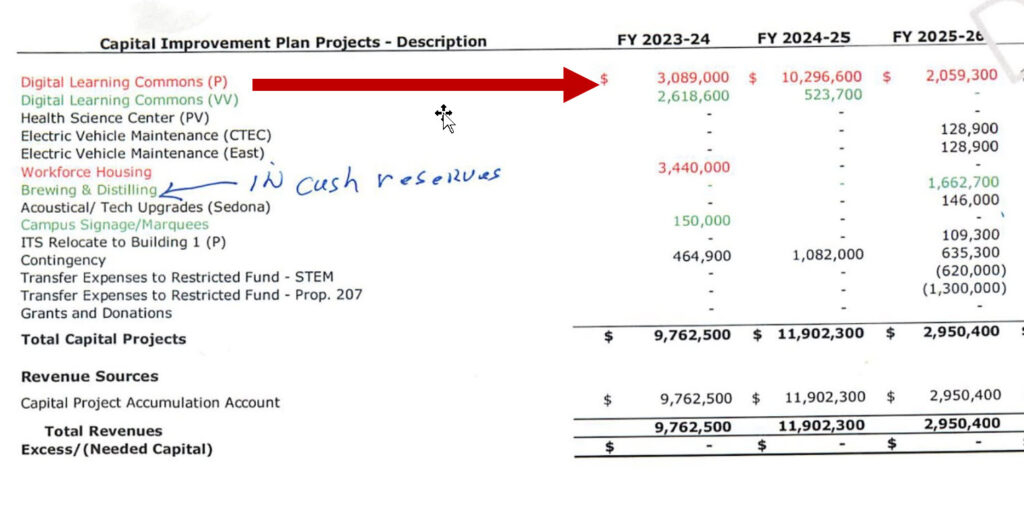
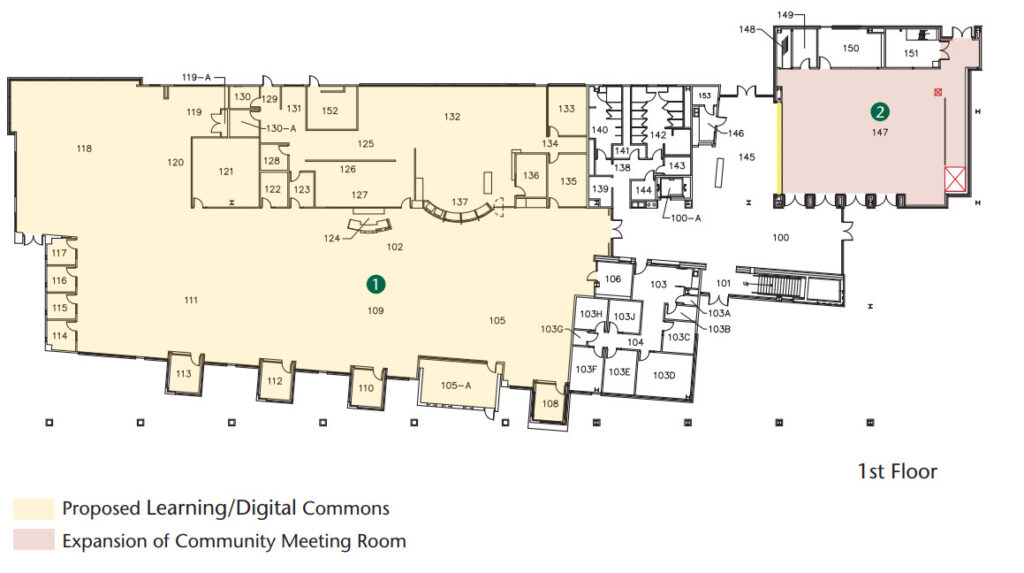
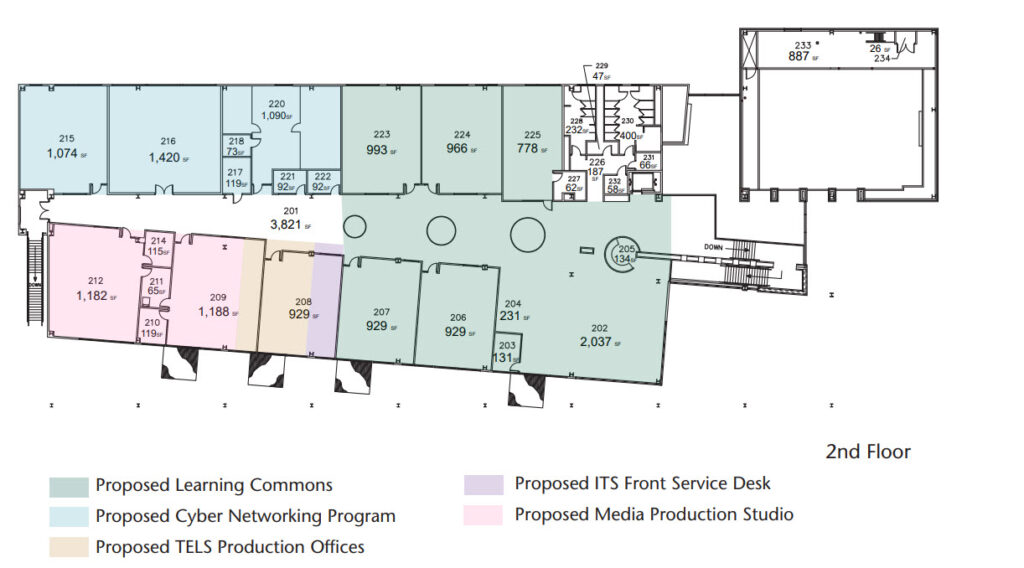
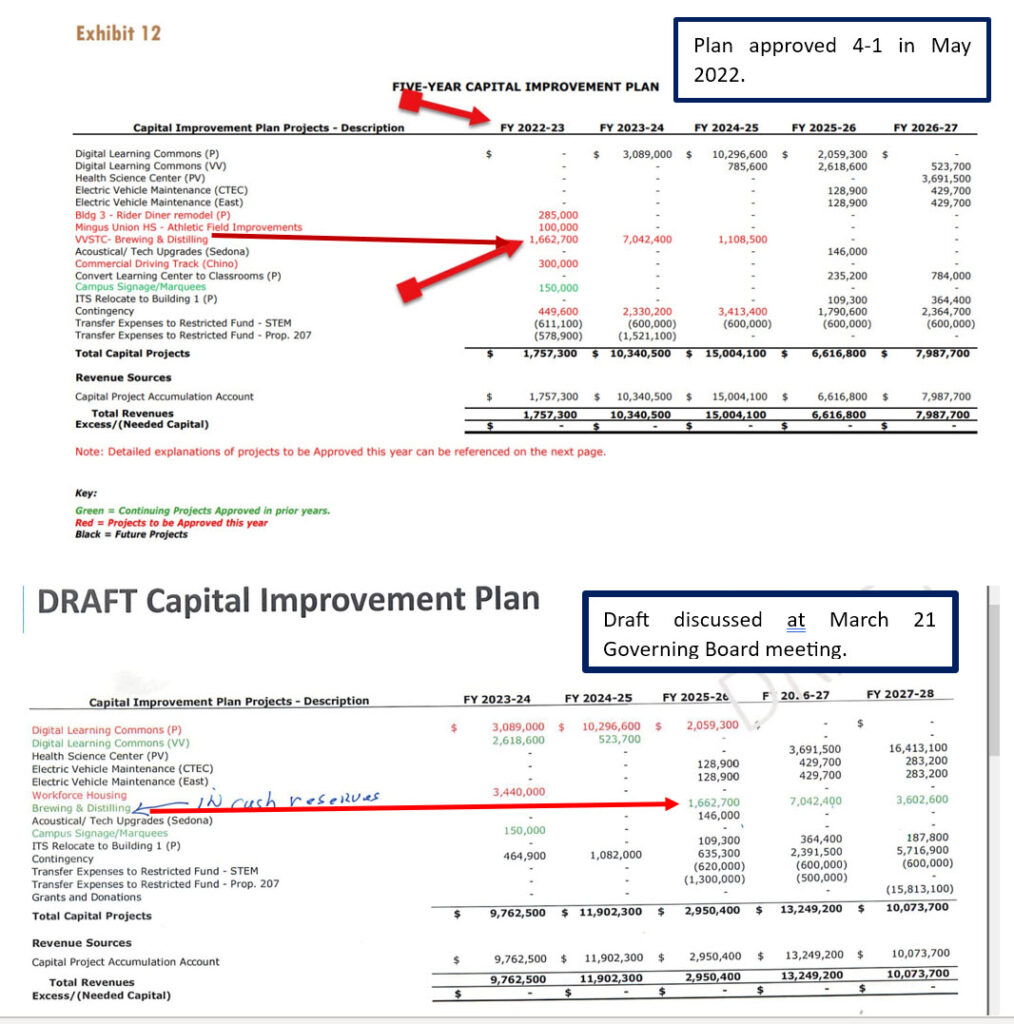
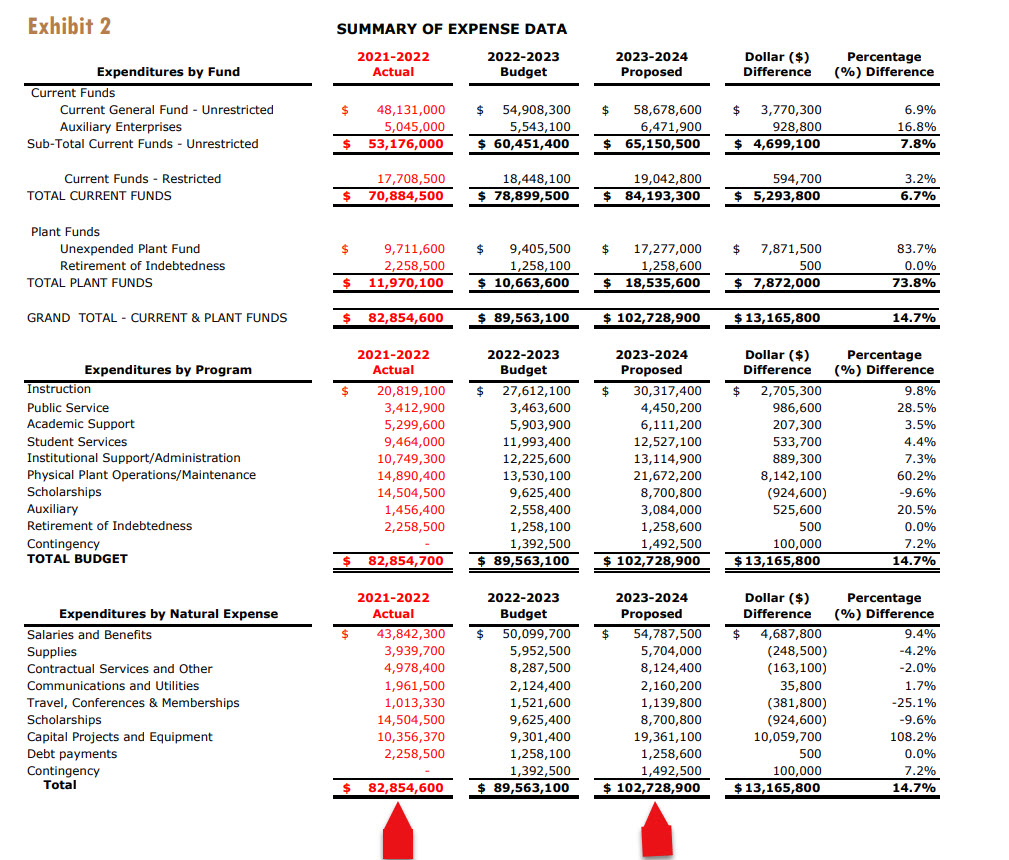
College data reveals expenditures in 2021-22 were $82.854 million while 2023-24 proposed budget expenditures are at $102.728 million. Salaries and benefits (up 9.4%), capital projects and equipment (up 102.2%) account for $13 million of the proposed increase over last year’s budget
Yavapai Community College rolled out its final budget proposal at the April 11, 2023, Governing Board meeting. It showed a $13 million increase over last year’s budget and a $20 million increase over the budget it adopted two years ago.
 Most of the proposed increase in the present budget was to cover a 9.4 percent increase in employee salaries and benefits plus a 102.2 percent increase in capital expenditures over 2022-23.
The chart below, which was presented to the Governing Board at the April meeting, provides additional information regarding the proposed expenditures for the 2023-24 budget year.
A public hearing will be held Tuesday, May 16, 2023, at 1:00 p.m. on the Prescott Campus in its Community Room (19-147) where the public may address the Governing Board regarding the expenditures. It is anticipated that the College will request a 5% County Property tax increase in order to pay for these expenditures. The public may also address the tax increase at the May 16 hearing.

 OPINION. Since June 2013, when Third District Representative Robert Oliphant voted “no” on increasing the Yavapai County primary property tax rate, the three representatives who followed him have all also voted “no” when it came to increasing the property tax rate to support the Community College. What are some of the reasons that explain this consistent opposition to increasing Sedona/Verde Valley tax rates? The following is a list of a few of those reasons:
 Yavapai Community College indicated at the March 2023 District Governing Board meeting that it will be seeking a 5% primary property tax rate increase in May of 2023. It will most likely argue that it needs more operating revenue, and the only available source appears at present to be Yavapai County residents’ primary property taxes.
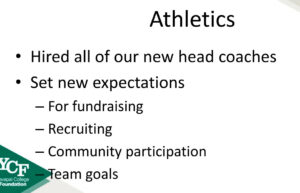 Once she was established and familiar with the Community College, President Dr. Lisa Rhine instituted major changes in the Athletic Department’s culture by creating specific written goals for coaches to meet, including goals for fundraising, recruiting, community participation, and “team goals.” For the first time in its 50-year history, the College directed the coaches to focus more heavily on recruiting outstanding Yavapai County student athletes, with a goal of each team being
  made up of about 25% student athletes from the County.
 Governing Board Chair Deb McCasland in the September 7, 2022, Verde Independent newspaper, the coaches left because they refused to accept new recruiting and scholarship guidelines instituted by the college.
  District, have raised concerns about the College’s lack of focus on recruiting outstanding local athletes. They also expressed concern about the college’s practice of providing generous taxpayer-funded scholarships to out-of-state and international athletes, while rosters often included few or no local athletes.
 five years ago “to focus more attention on recruiting local student athletes (county/state).” A “mandate” was instituted “that required 25% of all student athletes recruited had to be from local high schools,” she said. Furthermore, the coaches were told “that the support for out-of-state and international students will decrease as we increased the scholarship support for local
  student-athletes.” “Those three coaches who decided to leave the college ignored those mandates,” wrote McCasland.
 Assistant coach Miles Kizer also announced his resignation from Yavapai College at the same time. Then, in August 2022, the Athletic Department announced the resignation of Doug Eastman as the Head Coach of the Yavapai College softball team. Eastman won 343 games, making him the winningest softball coach in program history. His 300th win at
  Yavapai Community College (also the 800th of his career) came during the 2022 season.
 The College hired replacements for the coaches who left an faced issues such as rebuilding a program and quickly recruiting athletes for it. It appeared from the October 2022 presentation to the Governing Board that it was relatively successful in its efforts.